
BY Dorte Bladt
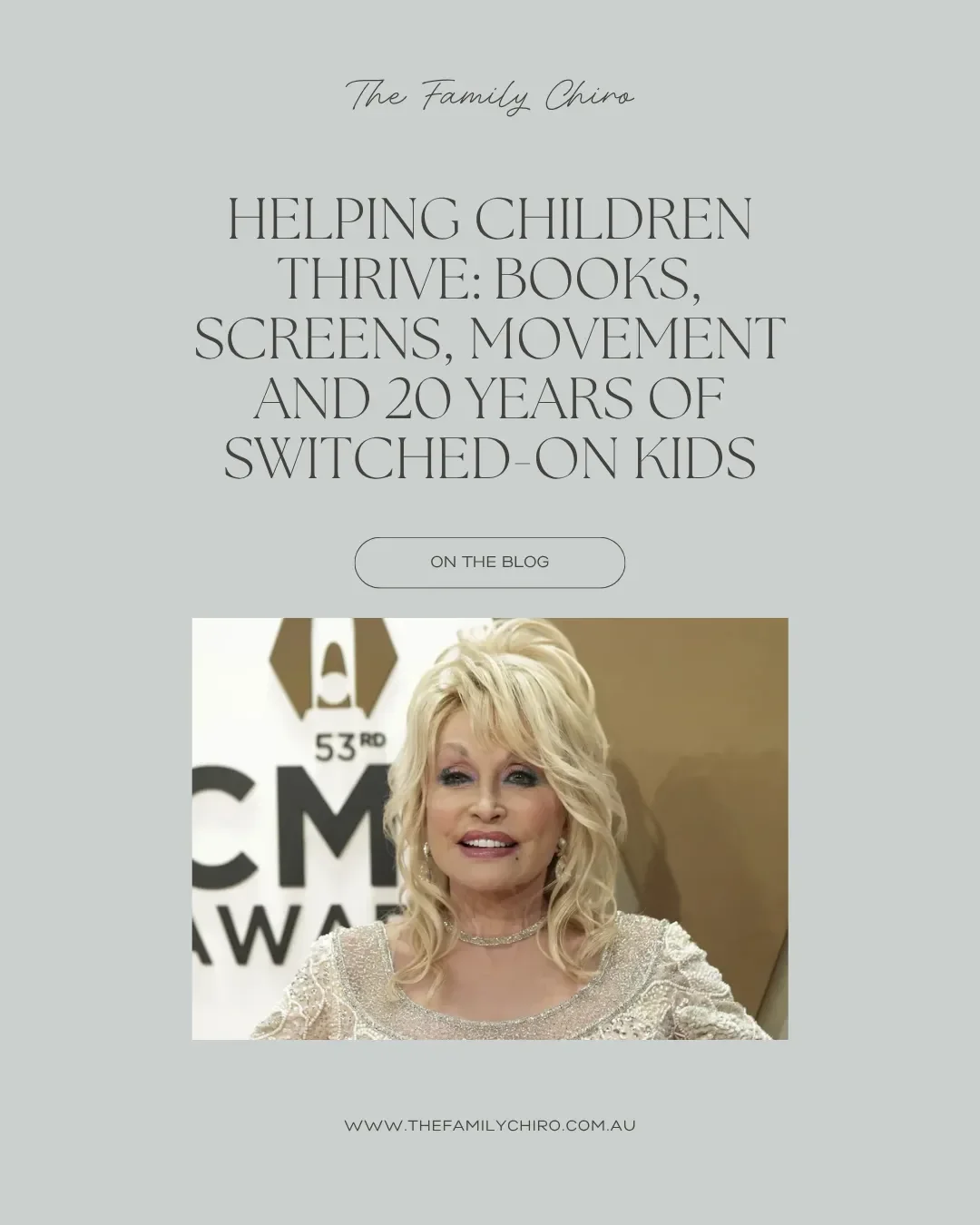
9 to 5. Jolene. I Will Always Love You. And more than 3,000 songs written over an extraordinary career.
With Dolly Parton’s passing, the world lost an incredible creative force. But one of her most important legacies had nothing to do with music.
In 1995, she established Dolly Parton’s Imagination Library, inspired in part by her father’s struggles with literacy.
The idea was wonderfully simple:
Give children books.
Every month, enrolled children from birth to five receive their own high-quality, age-appropriate book, completely free to the family. The program now operates internationally, including here in Australia.
And it appears to have done far more than simply fill bookshelves.
Research involving tens of thousands of families has found that children participating in the Imagination Library are read to more frequently and demonstrate stronger early literacy skills, including vocabulary and sound awareness.
That matters.
Long before children formally learn to read, they are learning to listen, communicate, recognise sounds, follow a story, imagine, concentrate and make meaning from language.
And so much of that begins with something as simple as:
“Shall we read a book?”
Why children’s learning matters more than ever
Recent international education results (PISA) have again raised concerns about how children are progressing in areas such as reading and mathematics.
Australia still performs above the OECD average overall, but long-term trends in literacy and numeracy have been heading in the wrong direction.
There is no single explanation for this.
Children’s learning is influenced by many things: attendance, teaching, family life, sleep, stress, socioeconomic factors, motivation, physical activity and, increasingly, the way technology is used.
Screens are now part of almost every child’s life.
That does not mean screens are automatically harmful. Technology can be useful, creative and educational. It is more about:
How much? How often? And what is screen time replacing?
If screens begin to replace reading, movement, outdoor play, face-to-face conversation, creativity or sleep, we may be losing some of the experiences children need most.
That is why some countries are now reducing unnecessary screen use in schools and reintroducing more physical books and analogue learning.
Sometimes progress does not mean replacing everything old with something digital.
Sometimes children still need the simple things.
Books. Movement. Conversation. Play. Curiosity. Human connection.
Children learn with their whole body
Learning is not something that happens only at a desk or on a screen.
Children learn when they climb, fall, balance, build, draw, run, talk, imagine, sing, explore and ask endless questions.
They learn through relationships.
They learn through movement.
They learn through play.
They learn through sleep and recovery.
They learn through being challenged, supported and encouraged to try again.
A child’s development is an extraordinary interplay between physical, emotional, social and cognitive experiences.
And that broader view of childhood has shaped much of my work for decades.
Switched-on Kids turns 20
This month marks 20 years since I created Switched-on Kids.
I first developed Switched-on Kids in 2006 from a desire to help children develop and succeed in schools. I wanted to teach chiropractors to assess and support children in a more thoughtful, whole-child way.
Since then, I have taught Switched-on Kids programs to chiropractors around the world, while also using and refining the principles in practice every day.
That combination has been incredibly important.
Teaching makes you question what you know.
Clinical practice makes you test whether what you teach is useful in the real world.
And over 20 years, Switched-on Kids has continued to evolve through research, clinical experience, conversations with other health professionals and, most importantly, through working with children and families.
The central idea is:
Look at the whole child.
Not just the symptom.
Not just the behaviour.
Not just the school result.
Look at how they move, sleep, communicate, interact, regulate, eat, play and connect with the world around them.
Children are not a collection of separate parts.
Everything influences everything else, and it’s all connected by the nervous system.
Supporting healthy child development at home
The good news for parents is that supporting children’s development does not always require complicated strategies.
Some of the most valuable things are also the simplest:
Read together regularly.
Encourage outdoor play and movement.
Protect sleep.
Create screen-free times in the day.
Eat together when possible.
Let children be bored sometimes.
Talk with them.
Listen to them.
Encourage curiosity.
Give them opportunities to move, explore and create.
None of these things need to be perfect.
It is the pattern over time that matters.
Twenty years into Switched-on Kids, and after teaching these concepts around the world and using them in practice every day, I still come back to the same principle:
Children thrive when we consider the whole child — their nervous system, body, development, relationships, experiences and environment.
And sometimes that begins with something as simple as opening a book together.
