
Jolly Jumper challenges for posture and development
BY DORTE BLADT
Why Letting Babies Develop Naturally Matters More Than We Think
As parents, we all want to give our children the very best start in life. We celebrate every milestone, we keep an eye on the apps, we share photos of those first rolls, sits and steps. And in a world full of products designed to “help” our babies develop faster, it’s easy to think that more support must mean better progress.
But here’s something fascinating—and important—that I want to share with you.
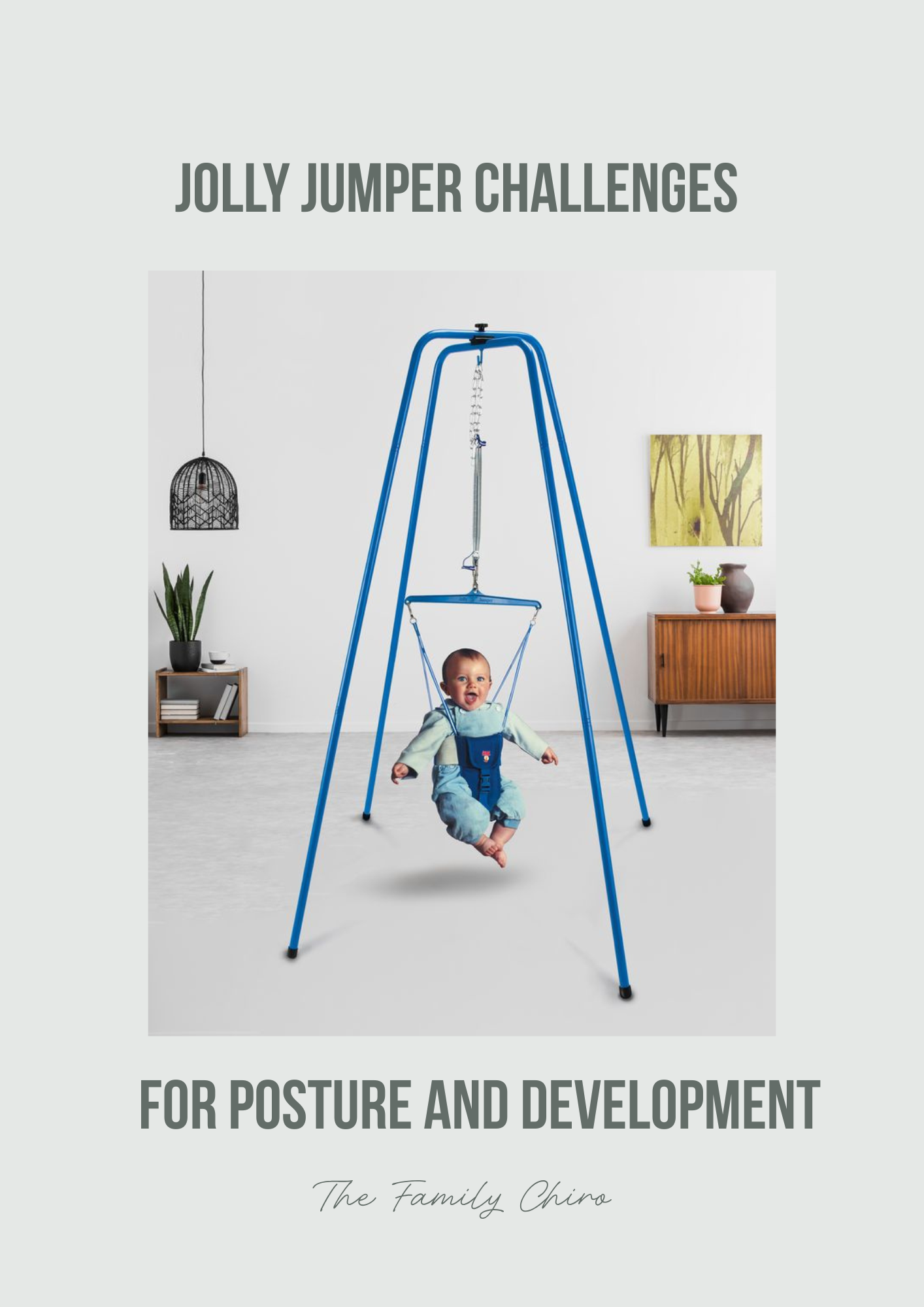
While preparing a professional training on children’s posture and development, I came across a compelling study that followed children who, as infants, spent a lot of time in walkers, jumpers, stand-assist toys, Bumbo seats and similar equipment. These are the devices that hold babies upright before their bodies are naturally ready to sit or stand alone.
The researchers found that these children were more likely to experience challenges later in childhood, including:
postural imbalances
reduced coordination
persistent primitive reflexes
and, in some cases, increased attention or behavioural difficulties
At first, this might seem surprising. After all, these devices often make babies look advanced—sitting tall, standing strong, bouncing with joy. But on the inside, something very different is happening.
Movement Builds the Brain
Babies learn through movement.
But not just any movement—movement that happens in a specific order.
Tummy time, pivoting, rolling, creeping, crawling, pulling to stand… each stage builds:
balance
core strength
vestibular (inner ear) development
proprioception (body awareness)
reflex integration
early attention and emotional regulation
When a device holds a baby upright before they can get there themselves, they skip essential steps in that developmental sequence. It’s like asking a child to write before they’ve learned to hold a pencil.
The study suggested that rushing children into upright positions may reduce the natural time they spend practising the movements their brains and bodies actually need at that stage—leading to gaps that may show up years later.
But Here’s the Good News
Development isn’t a one-shot deal.
Children can revisit and strengthen missed movement patterns later in life.
Through:
playful floor time
specific movement activities
reflex-integration exercises
and chiropractic care focused on neuromuscular development
…children can catch up, integrate what was missed and thrive.
I have seen this in practice for decades—and it aligns beautifully with what current research is confirming.
So What Can Parents Do?
Here are some simple, powerful steps:
✔ Let babies spend as much time as possible on the floor
This is their “gym,” their laboratory, their developmental playground.
✔ Use upright devices sparingly
Think of walkers, jumpers and seats as occasional tools—not daily essentials.
✔ Trust your baby’s rhythm
All children develop differently.
They don’t need to be rushed.
✔ Celebrate the tiny movements
Rolling, reaching, weight-shifting—these are the real building blocks of strong bodies and bright, resilient brains.
Final Thought
You are your baby’s safe place, their guide and their favourite teacher. By honouring their natural pace—from the floor upward—you’re supporting their development in the most meaningful way possible.
If you’re ever unsure about your baby’s motor development, posture or movement patterns, reach out. Early support makes a world of difference, and at The Family Chiro we are always here to help.
Yours in Health,
Dorte and The Family Chiro Team
